Contents · 28
- What makes restaurant marketing different from other services
- Google Business Profile - the foundation for restaurants
- A full profile - categories, hours, attributes, photos
- The menu on Google - keeping it updated
- Posts, Q&A, review management
- Reservations integration
- Local SEO for restaurants
- Keywords for Wrocław restaurants
- NAP consistency in directories
- Local backlinks
- Social media for restaurants
- Instagram - food photography, Stories, Reels
- Facebook - events, reviews, community
- TikTok - viral food content
- Review management - the heart of online reputation
- Where to get reviews - ethical strategies
- Responding to negative reviews
- Tools
- Online ordering - your own platform vs Pyszne/Glovo/Wolt
- Loyalty programmes and CRM for restaurants
- Stamp cards vs digital
- Email marketing for restaurants
- Ads for restaurants - Facebook/Instagram vs Google
- Facebook/Instagram for food photography and awareness
- Google for intent-based "restaurant [district] [cuisine]"
- Local PR - Wrocław influencers and food bloggers
- Seasonality - how to plan marketing through the year
- Summary
Wrocław has one of the densest food scenes in Poland - around 1,500 restaurants, cafés, bistros and food trucks compete every day for the attention of 670 thousand residents plus thousands of tourists. From the regional cuisine of Lower Silesia, through Michelin-recognised fine dining, to popular Asian food and classic pizzerias - Wrocław offers everything.
For restaurant owners that means one thing: good food and pleasant service are no longer enough. Most restaurants get lost in the crowd, and the ones that succeed share one trait - conscious, consistent online marketing.
The truth is brutal. You may have the best pizza in Wrocław, but if you don't appear in Google for "pizza delivery Krzyki" or "Italian restaurant Wrocław centre", then for 73% of potential guests you simply don't exist.
In 2026 customers don't ask their friends - they take out a phone, type a phrase into Google, check the reviews, look at photos of the food on Instagram and decide within 90 seconds. A restaurant that neglects its digital presence, even with great cuisine, loses dozens of customers a day to competitors with a louder online presence.
In this guide we break down a complete restaurant marketing plan for Wrocław in 2026. From the foundations (Google Business Profile, local SEO), through social media (Instagram, Facebook, TikTok), to advanced strategies (CRM, loyalty, online ordering, influencer marketing). Whether you run a small café in Krzyki, a restaurant in the heart of the Market Square, or you are planning to open a new concept - you will find practical tips here that you can implement today.
73%
1500+
4.5+
What makes restaurant marketing different from other services
Restaurant marketing differs significantly from marketing for other local businesses - law firms, hair salons or car workshops. You need to understand these differences to plan an effective strategy and avoid mechanically copying an approach from other industries.
First - decisions are quick and emotional. A customer choosing a restaurant for lunch doesn't spend days researching, as they would when choosing a lawyer. The decision is made in 90-180 seconds - based on photos, reviews, location and gut feeling. This means visual content is absolutely critical - one stunning photo of a dish can attract more customers than a thousand words.
Second - conversion happens in the real world, not online. Unlike e-commerce, where the whole customer journey is digital, a restaurant converts when the guest physically walks in. That makes tracking and attribution harder, but it also gives experience an advantage - if the visit was great, recommendations naturally bring more guests. Reviews and word of mouth carry disproportionate weight in hospitality compared with other industries.
Third - visits are cyclical. Unlike services such as a renovation (once in several years) or a hairdresser (once a month), restaurants can count on visits several times a month or week. Loyalty and returning customers are gold - CRM, loyalty programmes and email marketing have a huge ROI in hospitality.
Fourth - seasonality and occasions are strong. Valentine's Day, New Year's Eve, Christmas, Mother's Day, summer and garden season, the start of the grilling season - every restaurant has to plan campaigns for specific dates 4-8 weeks in advance.
Fifth - competition is hyperlocal. A restaurant in Wrocław doesn't compete with restaurants in Kraków - it competes with 20-50 venues within a 2 km radius. That calls for ultra-precise geographic targeting and a presence in local Facebook groups ("Wrocław - polecam!", "Wrocław co gdzie kiedy", "Wrocław foodies").
Google Business Profile - the foundation for restaurants
Google Business Profile (formerly Google My Business, now officially GBP) is the absolute basis of restaurant marketing in Wrocław. For many restaurants 60-80% of new guests come from an optimised Google profile. Without an active, well-run GBP, every other marketing investment loses 50% of its effectiveness, because this is the profile people see in map results and local search.
A full profile - categories, hours, attributes, photos
The GBP profile must be 100% complete - Google rewards full profiles with higher positions in local results. Specifically:
- Primary category - precise (e.g. "Italian restaurant", not the general "Restaurant")
- Additional categories - 2-3 extra (e.g. "Pizzeria", "Takeaway restaurant", "Catering")
- Opening hours - exact, with separate hours for the kitchen and the venue, and holiday hours kept up to date
- Attributes - all that apply: gluten-free options, vegetarian/vegan, parking, wheelchair access, garden, Wi-Fi, pets welcome, cards accepted, delivery, takeaway, reservations
- Photos - at least 30-50, ideally 100+, across categories: exterior (5+), interior (10+), food (30+), team (5+), special occasions (10+)
- Logo and cover photo - professional and consistent with the brand
- Short description - 750 characters with naturally placed keywords ("authentic Italian cuisine Wrocław centre", "family restaurant in Krzyki")
- Business identity attributes - "Women-led", "LGBTQ+ friendly", "Black-owned" - add them if they apply (they often help with search filtering)
Restaurants that update photos at least once a week have on average 47% higher reach on Google than those with photos from 6 months ago. The algorithm punishes "sleepy" profiles.
The menu on Google - keeping it updated
Google lets you add a full menu to the profile - one of the most underrated elements. A menu on Google:
- Appears directly in search results (many people don't even visit the website)
- Helps with ranking for phrases such as "carbonara Wrocław" or "ramen Wrocław" - if you have those dishes on the menu
- Lets you add photos per dish (higher click-through from the map)
Update the menu at least once a month. Seasonal menus? Update at the start of each season. New promotional dishes? Add them straight away.
Posts, Q&A, review management
GBP has several active marketing features that most restaurants ignore:
- Google Posts - publish 2-4 posts a month (menu news, events, promotions, photo of the week). Posts support ranking and remind customers of your venue in the results.
- Q&A - check guests' questions at least once a week. Answer quickly (24 h at most). Ask the typical questions yourself ("Do you have vegetarian options?", "Can I book for 2 people on Friday evening?") and answer as the owner - it is legal and rewarded by Google.
- Review responses - reply to every review within 24-48 hours. Positive ones - a short thank-you with a personal touch. Negative ones - a professional reply and an offer to resolve it (preferably offline), with no arguments. Restaurants that reply to 90%+ of reviews have a 27% higher conversion from the map.
Reservations integration
In 2026 Google integrates with booking systems (OpenTable, ResDiary, the Polish Restaumatic). Activate the integrations - a customer can book a table straight from the Google map without going to your website. That reduces friction and increases conversion by 30-50%.

Local SEO for restaurants
Local SEO for restaurants is more technique than art. The biggest return comes from specific, measurable actions, not from general "content creation". Let's focus on three pillars.
Keywords for Wrocław restaurants
The best keyword structure for a restaurant in Wrocław:
Core phrases (transactional, high intent):
- "restaurant [district] Wrocław" - e.g. "restaurant Krzyki Wrocław"
- "[cuisine] Wrocław" - e.g. "Italian cuisine Wrocław", "ramen Wrocław"
- "[cuisine] [district] Wrocław" - "pizza Old Town Wrocław"
- "restaurant for lunch Wrocław" / "restaurant for dinner Wrocław"
- "best [cuisine] restaurant Wrocław" - longer, less competitive
Occasion phrases (event-based):
- "restaurant for Valentine's Day Wrocław"
- "restaurant for New Year's Eve Wrocław"
- "restaurant with a garden Wrocław"
- "family restaurant with kids Wrocław"
- "restaurant for corporate events Wrocław"
Delivery phrases (if you offer it):
- "[cuisine] delivery Wrocław"
- "pizza delivery [district] Wrocław"
Content strategy: create a dedicated landing page for your most important phrases (e.g. "pizza delivery Krzyki Wrocław" as a separate subpage), with local details (delivery time, delivery area map, reviews from customers in the district).
NAP consistency in directories
NAP (Name, Address, Phone) must be identical everywhere on the web:
- Google Business Profile
- Facebook page
- TripAdvisor
- Pyszne.pl (if you use it)
- Glovo, Wolt
- Local directories: Mapa Wrocławia, Wrocław.pl, Yelp Poland
- Industry: Restaurant Guru, OpenTable, Lokal.pl
The most common mistakes: different versions of the name ("Restauracja Mario" vs "Mario Restaurant"), different address formats ("ul. Świdnicka 5" vs "Świdnicka 5/7"), different phone number formats (+48 vs 48). Google checks NAP consistency - discrepancies lower trust in the profile and its position in local results.
Local backlinks
For restaurants, the most valuable local links are:
- Local food blogs: smakw.pl, wroclawjedzonko.pl, foodies.Wrocław.pl, eatwroclaw.com - actively look for reviews
- Wrocław media: gazetawroclawska.pl, tuwroclaw.com, Wrocław.pl, radiowroclaw.pl
- Local Facebook groups: contribute meaningfully, and occasionally drop a link to the menu
- Industry partnerships: local pubs, breweries, suppliers of local ingredients - cross-promotion
- Sponsoring local events: festivals, runs, charity events - often a link on the event page
3-5 quality local links a month is a realistic target. After a year that is 40-60 links with local authority - a significant boost for rankings.
Social media for restaurants
After GBP, social media is the second-biggest source of new customers for a Wrocław restaurant. But the strategy has to fit the platform - Instagram works one way, Facebook another, and TikTok entirely differently.
Instagram - food photography, Stories, Reels
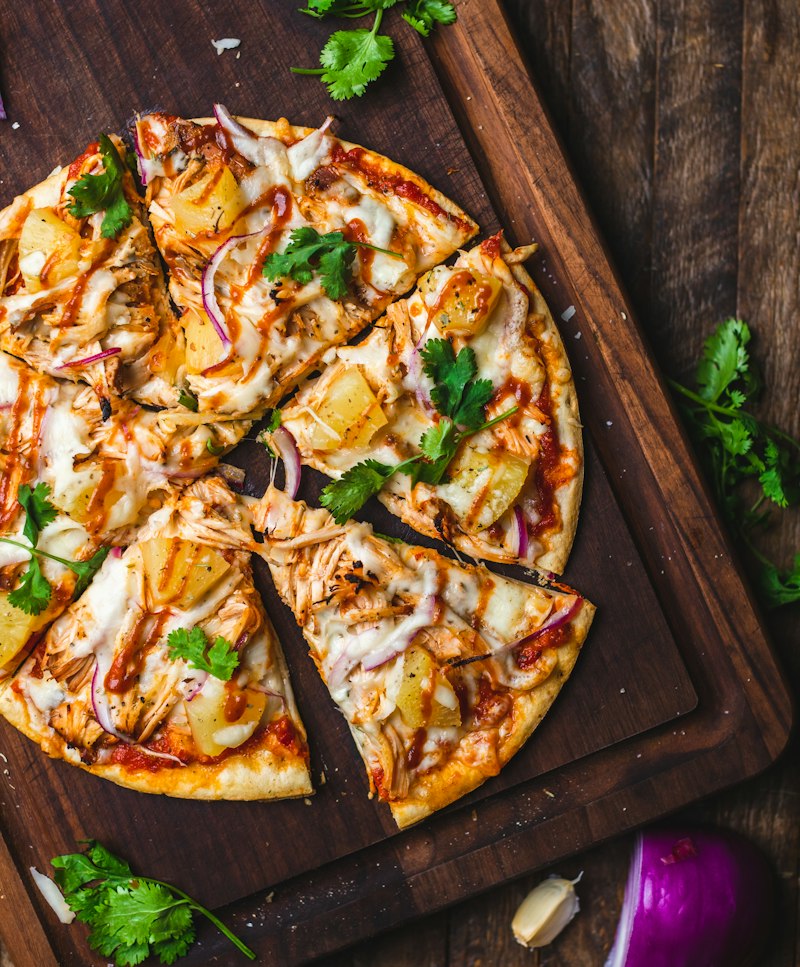
Instagram is the number one platform for hospitality in 2026. Why? Because hospitality is above all visual emotion - an appetising photo of a dish can sell a visit in 3 seconds.
An Instagram strategy for a Wrocław restaurant:
- Business profile with a full description, hours, contact, and a link tree pointing to Restaumatic/menu/reservations
- Hashtags: local (#Wrocław, #wroclove, #wroclawjedzenie, #wroclawfood, #wroclawskafala) plus industry (#instafood, #foodporn, #foodphotography) plus specific (#pizzanapoletana, #ramen, #brunchwroclaw)
- Geotags - always tag the location. Wrocław, the district, the street
- Posts 3-5 a week: 40% Reels (biggest reach), 30% classic food photos, 20% carousels, 10% UGC
- Stories every day, 3-8 - menu of the day, behind-the-scenes, polls, Q&A boxes
- Instagram Live every 2-4 weeks - an interview with the head chef, a dish preparation demo, a tour of the venue
A realistic target for a restaurant with 60-80 seats in Wrocław after 12 months of consistent work: 5,000-15,000 followers, ER of 4-7%, and 30-80 new guests a month coming directly from Instagram.
Facebook - events, reviews, community
For Wrocław restaurants in 2026 Facebook is no longer the "must-have" it was 5 years ago, but it still plays important roles:
- Facebook Events - for special occasions (Valentine's Day, New Year's Eve, themed events, concerts), Facebook has the best tool for promoting local events
- Reviews - the second most important collection after Google (TripAdvisor is third for tourists)
- Local Facebook groups - "Wrocław - polecam!" (200k+ members), "Wrocławskie Biznesy", "Wrocław co gdzie kiedy" - a presence in the groups brings real recommendations
- Facebook Ads - local campaigns geotargeted 2-5 km from the restaurant, more effective than Instagram for "buy now" offers
- Messenger automation - a chatbot with the menu, hours and dietary questions
TikTok - viral food content
TikTok is a "bonus channel" for restaurants in 2026, but its organic reach potential is huge:
- Behind the scenes: cooks preparing a dish, the kitchen in action, natural team chemistry
- Recipe reveals: "this is how we make our [signature dish]"
- Food challenges: TikTok-trending challenges featuring your dishes
- POV / day in the life: a day at the restaurant, weekend chaos, opening moments
- Storytelling: the story of how the venue came to be, the founders' story, local culinary tradition
The real challenge: it needs consistent, authentic content. 2-3 Reels/TikToks a week, cross-posted between Instagram and TikTok. After 6 months you typically see the first viral posts (50k-500k views). After a year, a stable community of 5-30k followers.
Review management - the heart of online reputation
For a restaurant, reviews are an absolutely critical part of marketing. 88% of potential customers read reviews before a visit, and the difference between 4.2 and 4.6 stars means a 25% difference in actual conversions.
Where to get reviews - ethical strategies
LEGAL and effective:
- QR codes on the table leading straight to the Google review window (g.page/r/[ID]/review) - 5-15% of guests will leave a review
- Email after an online booking with a link to the review (24 h after the visit)
- A personal question from the waiter: "If you enjoyed your visit, we'd be grateful for a review on Google" - without pressure
- A bill card with a QR code: "Did you enjoy it? Share your opinion" + a QR code
- Email signature: a review link in the footer of your emails
- A reminder when the bill is brought
FORBIDDEN by Google (the penalty is a profile ban):
- Offering discounts in exchange for reviews
- Buying fakes
- Writing your own reviews
- Asking only satisfied customers (review gating)
- Manipulating the rating system
Responding to negative reviews
Negative reviews are inevitable. The key is a professional reply within 24-48 hours. The pattern:
- Thank them for the feedback, even a negative one
- Apologise for the poor experience
- Offer offline contact (email/phone) to resolve the matter
- Name a concrete corrective action (not a vague "we'll work on it")
- End on a positive note
Restaurants that respond professionally to negative reviews have higher conversion than those with fewer negative reviews left unanswered - because potential customers see that the owner cares.
Tools
Professional tools for managing reviews:
- Google native tools - enough for 1 venue
- Yext - for chains of 3+ locations
- Reputation.com - enterprise level, effective
- Birdeye - mid-tier, alerts plus automation
- Trustmary - a Polish tool, accessible
Online ordering - your own platform vs Pyszne/Glovo/Wolt
A strategic question for every restaurant offering delivery or takeaway. The decision has a real impact on margin and control over the business.
| Aspect | Your own system | Pyszne/Glovo/Wolt |
|---|---|---|
| Commission | 0-3% (Restaumatic) | 28-35% |
| Brand control | Full | Limited (platform template) |
| Customer loyalty | Yes (your database, your emails) | No (the platform's customer) |
| Data ownership | Yours | The platform |
| Customer marketing | Yours (email, SMS, retargeting) | No access to customers |
| Organic reach | Limited to your own visibility | Huge (millions of platform users) |
| Customisation | Full | None |
| Setup cost | One-off, depends on the solution | None |
| Setup time | 1-3 weeks | 1 day |
The best strategy in 2026: a presence on 1-2 platforms for reach (Pyszne.pl gives the widest reach in Poland, Wolt has premium positioning among more discerning customers) plus your own system for loyal customers. After a year aim for 60-70% of orders through your own channel and 30-40% through external platforms. That balances reach and margin.
Loyalty programmes and CRM for restaurants
Winning a new customer is 5-7x more expensive than keeping an existing one. For a restaurant, where the same customer may visit 12-50 times a year, CRM and loyalty have a huge ROI.
Stamp cards vs digital
Paper cards (10 visits = 1 free) have their charm and simplicity, but come with problems: lost cards, no data, no retargeting.
Digital loyalty (apps like Stamper, Loyalty Lion, or your own app):
- The customer scans a QR code at payment and earns points
- Your customer database with phone number, email and visit history
- Push notifications about promotions and the customer's birthday
- Data for ad campaigns (lookalike audiences in Meta)
- Personalised rewards (e.g. the customer's favourite dessert free on their 5th visit)
ROI of digital loyalty programmes: typically 200-400% in the first year, mainly through a 25-40% increase in visit frequency among registered customers.
Email marketing for restaurants
Restaurants rarely think about email marketing, but it is one of the most profitable channels:
- Monthly newsletter - the new seasonal menu, upcoming events, the head chef's recommendations
- Birthday emails - an automatic 20% discount on the birthday (the customer and 3 companions)
- Win-back campaigns - customers who haven't visited for 60+ days get a "we miss you" with a single offer
- Event invitations - VIPs get an invitation 48 h before the public announcement
- Post-visit thank you - 24 h after the visit, with a request for a review and a "see you soon"
The realistic ROI of restaurant email marketing: 15-40 zł of extra value for every złoty spent on the tool and the time to run it.
Ads for restaurants - Facebook/Instagram vs Google
Which ad platform is better for a restaurant? The practical answer: both, in different proportions - a classic multi-channel case (we cover the Facebook vs Google Ads comparison in detail in a separate article).
Facebook/Instagram for food photography and awareness
Meta Ads is the main platform for building hospitality awareness:
- Food photography in Stories and Reels - using your best photos and video as creatives
- Lookalike audiences - find people statistically similar to your current guests
- Local campaigns - geotarget 2-5 km from the restaurant, demographics 25-55
- Carousel ads with the menu - a showcase of your 5-10 most popular dishes
- Event ads - for special events (Valentine's Day, New Year's Eve, concerts)
A realistic Meta budget for a Wrocław restaurant is modest for regular campaigns and several times higher around special occasions - scale it to the size of the venue and test before you raise it.
Google for intent-based "restaurant [district] [cuisine]"
Google Ads for restaurants has a different intent profile (the customer is looking for a specific restaurant at that moment):
- Search Ads for "[cuisine] [district] Wrocław"
- Local Service Ads (if available for restaurants in Poland)
- YouTube Ads for brand video (15-30 second teasers of the atmosphere and kitchen)
- Performance Max with an asset library (photos, video, descriptions)
Google Ads for restaurants has a higher CPC than Meta, but a higher conversion to bookings.
Local PR - Wrocław influencers and food bloggers
Wrocław has a strong food-blogger scene and plenty of culinary micro-influencers. A guide to who to follow in 2026:
- Micro-influencers 2-15k followers: often the best ROI - authentic, with an engaged local community; typically paid in meals plus a modest fee
- Macro-influencers 15-100k: wider reach, but the audience is often tourists (outside Wrocław), and the fees are higher
- Professional critics: the blogs smakw.pl and eatwroclaw.com, and collaboration with local media
An influencer marketing strategy for a Wrocław restaurant:
- Identification: the hashtags #wroclawjedzenie, #wroclove, #wroclawfood plus organic food profiles in Wrocław
- Qualification: ER 5%+, authentic comments, previous hospitality collaborations
- Briefing: clear expectations (1 post + 2 Stories, hashtags, geotag, link)
- Delivery: make the visit easy, give them an understanding of the menu and atmosphere, don't steer the content
- Measurement: a unique discount code per influencer, conversion tracking
Realistic results: 1 micro-influencer with 5-15k followers and a good collaboration = 30-100 new guests in the following 4-8 weeks.
Seasonality - how to plan marketing through the year
Restaurants have to think about marketing 4-8 weeks ahead for the main occasions. An annual calendar for Wrocław restaurants:
January: detox/healthy menu, post-New Year offers, #newyear-newyou campaigns
February: VALENTINE'S DAY 14.02 - campaign from 1.02, menus for couples, bookings, romantic photo sets March: Women's Day 8.03, spring on the menu
April: Easter, opening of the garden season, weekend brunches
May: Mother's Day, outdoor events, barbecues June: Father's Day, birthday and communion season
July-August: summer/tourism, gardens, light menu, offers for tourists
September: back to school, business lunches, end of summer
October: autumn on the menu, Halloween events (a growing trend in Poland) November: hospitality Black Friday, Andrzejki
December: CHRISTMAS - campaign from 15.11, Christmas Eve offers, sets, gifts (vouchers), NEW YEAR'S EVE - campaign from 1.12, event packages
The key: plan campaigns 6-8 weeks before the event, run the main ad campaigns 3-4 weeks before, and push hard 1-2 weeks before with FOMO ("last tables"). Valentine's Day and New Year's Eve typically account for 30-40% of the annual marketing budget, concentrated in 2 campaigns.
Summary
Restaurant marketing in Wrocław in 2026 is not a sprint but a marathon. Restaurants that achieve long-term success don't rely on a single platform or a one-off campaign - they build a digital presence systematically across all the pillars: a complete GBP with active reviews, local SEO, an active Instagram with food photography, local Meta and Google ad campaigns, an optimised website with online ordering, and CRM with a loyalty programme.
The biggest mistake Wrocław restaurant owners make is treating marketing as a cost that can be cut in a tougher month. Yet it is consistent marketing in the weaker months that builds the customer base for the better ones. The restaurants that succeed in Wrocław in 2026 are those that invest 5-10% of turnover in online marketing, measure the effect of every złoty and adjust their strategy every quarter.
If you run a restaurant in Wrocław and need marketing support - from optimising your Google profile, through social media content, to advanced ad campaigns - get in touch with Dekada72H. We specialise in local marketing for Wrocław service businesses. The first analysis and a 90-day strategy are always free.