Contents · 29
- What Is a Landing Page?
- Why Does a Landing Page Work Better Than an Ordinary Page?
- What Must an Effective Landing Page Contain?
- Landing Page vs Company Website - When to Choose Which?
- The Most Common Landing Page Mistakes
- Types of Landing Pages - Which Is Right for Your Business?
- A Lead Generation Landing Page
- A Sales Page
- A Click-Through Landing Page
- An Event Landing Page
- The Psychology of Conversion - Why People Click (or Don't)
- Social Proof
- Urgency and Scarcity
- Risk Reversal
- A/B Testing - How to Systematically Improve Landing Page Results
- Case Study - How a Landing Page Changed the Results of an Advertising Campaign
- A Renovation Company - a Google Ads Campaign Without and With a Landing Page
- How Much Does NOT Having a Landing Page Cost You?
- Can a Landing Page Be Visible in Google? SEO and Destination Pages
- Frequently Asked Questions About Landing Pages
- What is a landing page?
- What is the difference between a landing page and a website?
- How much does it cost to create a landing page?
- How quickly can I have a landing page ready?
- Does a landing page replace a company website?
- Can I have several different landing pages?
- Why Do We Build Landing Pages in Plain HTML?
- How Do We Build Landing Pages at Dekada72H?
- Summary
Are you spending money on Google or Facebook ads but not seeing results? Does your website look good but generate no enquiries from customers? The problem may lie not in the ad, but in where you send the traffic. Most companies make the same mistake - they send potential customers to the home page instead of to a dedicated landing page.
In this article we will explain exactly what a landing page is, why it is so effective and how it can help your company win more customers. As an agency with more than 10 years of experience building sites from scratch, we see every day the difference between companies that use landing pages and those that do not.
What Is a Landing Page?
A landing page (destination page) is a standalone web page created for one specific purpose - converting a visitor into a customer. Unlike an ordinary company website, which presents the whole offer and the history of the company, a landing page focuses on one service, one product or one action you want the user to take.
Think of it this way: your home page is like a shopping mall - lots of shops, lots of entrances, lots of distractions. A landing page is like a shop with a single product in the window and a clear path to the checkout. You know exactly why the customer came, and you lead them straight to the goal.

An effective landing page is one that can be measured and optimised for conversion.
Why Does a Landing Page Work Better Than an Ordinary Page?
The statistics speak for themselves. Companies that use dedicated landing pages achieve much better results than those that send traffic to the home page.
2-5x
68%
300%
Why is that? Because a landing page eliminates distractions. On an ordinary page the user can click the menu, go to the blog, check the portfolio, read the terms - and in the end forget why they came in the first place. A landing page gives them one option: fill in a form, call or buy. And that is exactly why it converts better.
The golden rule of a landing page: one page = one goal = one call to action. The fewer options you give the user, the more conversions you get.
What Must an Effective Landing Page Contain?
Every effective landing page is made up of a few key elements. Here is what must appear on your destination page for it to deliver results:
- An eye-catching headline - You have 3 seconds to convince the visitor to stay. The headline must clearly communicate the benefit, e.g. "Increase sales by 200% with a professional website".
- Benefits, not features - The customer does not buy a "responsive site with SEO". They buy "more customers from the internet". Write about what the customer gains, not about what you do.
- Social proof - Customer reviews, company logos, case studies, numbers. People trust other people more than ads.
- A clear call to action (CTA) - The "Order a free quote" button must be visible, high-contrast and repeated several times on the page.
- A contact form - The shorter the better. Name, email, phone - that is enough. Every additional field reduces conversion by 10-25%.
- No navigation menu - This is the key difference between a landing page and an ordinary page. We remove the menu so the user has nowhere to escape to.
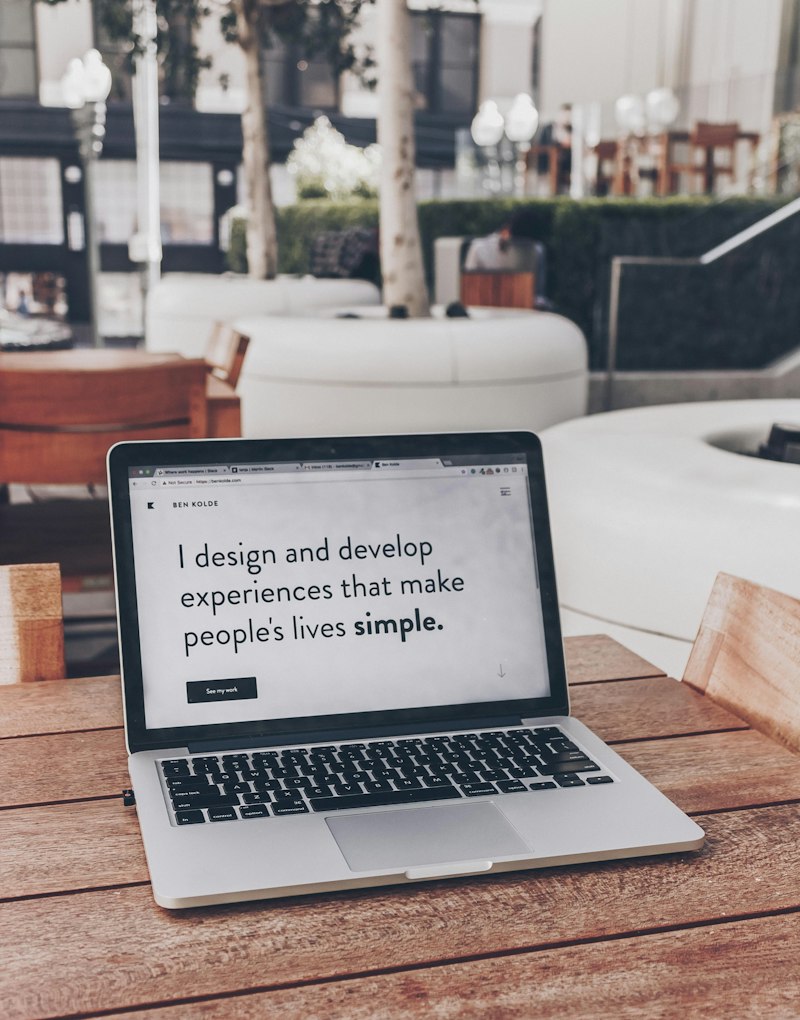
Every element of a landing page is designed to lead the user to conversion.
Landing Page vs Company Website - When to Choose Which?
A landing page and a company website are two different tools for two different purposes. They do not replace each other - they complement each other.
A company website builds an image, presents the whole offer and works as a business card on the internet. A customer can visit it to get to know your company, check the portfolio, read about the team.
A landing page serves one thing: conversion. You use it when you launch an advertising campaign, promote a specific service or want to collect contacts of potential customers.
Use a landing page if:
- You run an advertising campaign (Google Ads, Facebook Ads)
- You want to promote one specific service or product
- You collect contacts of potential customers (lead generation)
- You offer a free quote, consultation or e-book
- You organise an event or webinar
If you plan to launch a Google Ads campaign, also check our guide to Google Ads for small businesses - it describes how to start with a small budget and scale under ROI control.
The Most Common Landing Page Mistakes
We have seen hundreds of landing pages - both our clients' and their competitors'. Here are the mistakes that most often kill conversion:
- Too much text - a landing page is not an article. Short, concrete sentences work better than walls of text
- No clear CTA - if the user does not know what to do, they will do nothing. The button must be visible and unambiguous
- Slow loading - every second of delay means a 7% loss of conversion. That is why we build landing pages in plain HTML, without unnecessary code
- Inconsistency with the ad - if the ad promises a "free quote in 24h", the landing page must repeat it. Consistency builds trust
- No mobile version - more than 60% of traffic comes from phones. A landing page must look perfect on every device (responsive web design)
- A form that is too long - every extra field is a barrier. Ask for only what you really need

Clean, optimised code is the foundation of a fast landing page.
Types of Landing Pages - Which Is Right for Your Business?
Not every landing page is the same. Depending on the goal of your campaign, you need a different type of destination page. Here are the most important types of landing pages we build for our clients:
A Lead Generation Landing Page
The most common type of landing page for service companies. The goal: to collect a potential customer's contact details - name, email, phone. In return you offer something valuable: a free quote, consultation, audit, e-book or discount. This type of landing page works excellently for marketing agencies, law firms, renovation companies, medical practices and every company that sells services.
A Sales Page
A longer landing page that leads the user through the whole decision process - from becoming aware of the problem, through presenting the solution, to the final sale. It contains detailed descriptions, social proof, case studies and strong calls to action. Ideal for selling online courses, digital products or higher-value services.
A Click-Through Landing Page
A simple page whose only goal is to "warm up" the user and send them to the next step - e.g. a cart page, a registration form or a product page. Often used in e-commerce and SaaS. It has no form - it has only a button leading onward.
An Event Landing Page
A dedicated landing page to promote webinars, conferences, workshops or other events. It contains the date, programme, information about the speakers and a registration form. A key element: a countdown clock to the event, which builds a sense of urgency.
Not sure which type of landing page will be best for your company? That is normal - every industry and every campaign is different. That is why we start every project with a conversation about your business goals, not with choosing a template.
The Psychology of Conversion - Why People Click (or Don't)
An effective landing page is not just a pretty design and good copy. It is the application of proven principles of psychology that influence purchasing decisions. Here are the mechanisms we use when designing every landing page:
Social Proof
People make decisions based on what others do. If we see that 500 companies have already used a service, we automatically assume it must be a good solution. On a landing page we use this through:
- Customer reviews with photos and full names (not "John K." - that does not inspire trust)
- Logos of companies you work with - even 3-4 logos are enough to build credibility
- Numbers: "Over 200 completed projects", "10 years of experience", "98% satisfied customers"
- Case studies with concrete results - "We increased sales by 150% in 3 months"
Urgency and Scarcity
If the user thinks "I'll come back later", they will not come back. Statistics show that 97% of landing page visitors never return to it. That is why you must give a reason to act NOW:
- "A free quote only until the end of the week" - a time limit motivates action
- "5 free slots left this month" - limited availability increases value
- A countdown clock - a visual element of urgency that works especially well on event landing pages
Risk Reversal
People are afraid of making the wrong decision. The more risk you remove, the more people will convert. That is why on a landing page we use:
- "A free quote with no obligation" - zero risk for the customer
- "A money-back guarantee" - eliminates the fear of a bad investment
- "No long contracts" - removes the fear of being tied in
- Certificates, awards, membership of industry organisations - build institutional trust
97%
+34%
+42%

Regular analysis of results is the key to continuously increasing conversion - even a 5% rise in CR can double the profitability of an advertising campaign.
A/B Testing - How to Systematically Improve Landing Page Results
The best landing page is one that is continuously optimised. Even if the first version brings good results, there is always room to improve. A/B testing means creating two variants of the same element and checking which brings better results.
Elements worth testing on a landing page:
- The headline - Changing one word in a headline can increase conversion by 20-30%. Test different approaches: benefit vs problem, question vs statement, short vs long headline.
- The CTA button - The colour, text, size and placement of the button have a huge impact. "Submit" converts worse than "Get a free quote". An orange button may work better than a blue one - but you have to test it.
- The form - Test the number of fields. Sometimes cutting a form from 5 fields to 3 increases conversion by 50%. Other times adding a "Phone" field increases lead quality, even if it reduces their number.
- Social proof - Text reviews vs video, customer photos vs company logos, 3 reviews vs 10 reviews. Every industry reacts differently.
- Page length - A short landing page (above the fold) vs a long landing page with a full description. Expensive services usually need a longer landing page, because the customer needs more information before deciding.
At Dekada72H we do not finish work after launching a landing page. We monitor results, analyse user behaviour and systematically test changes so that your landing page converts better every week.
Case Study - How a Landing Page Changed the Results of an Advertising Campaign
To show the real power of a landing page, we will present a typical scenario we see with our clients.
A Renovation Company - a Google Ads Campaign Without and With a Landing Page
The client ran a renovation company and spent 4,000 PLN a month on Google Ads. The traffic went to its home page - pretty, but general. The site had a menu, an "About us" subpage, a portfolio, a blog, contact.
The user clicked the ad "Bathroom renovation Wrocław", landed on the home page and... got lost. They had to find the information about bathroom renovations themselves, check the portfolio, look for a contact form.
Results before the landing page:
- Budget: 4,000 PLN/month on Google Ads
- Clicks: ~800/month
- Form enquiries: 12/month
- Conversion rate: 1.5%
- Cost per enquiry: 333 PLN
We created a dedicated landing page in plain HTML, focused exclusively on bathroom renovations. No menu, no distractions. Headline: "A professional bathroom renovation in 14 days - from design to finishing". A gallery of bathroom projects (not a general portfolio). Reviews from customers who renovated bathrooms. A form with 3 fields. Loading in under 1 second.
Results after launching the landing page:
- Budget: 4,000 PLN/month (unchanged)
- Clicks: ~780/month (comparable)
- Form enquiries: 47/month
- Conversion rate: 6.0%
- Cost per enquiry: 85 PLN
4x
6.0%
85 PLN
The same advertising budget, the same company, the same services - but 4 times more enquiries. The only change? Instead of the home page, customers landed on a dedicated landing page. It is not magic - it is the mathematics of conversion.
How Much Does NOT Having a Landing Page Cost You?
Many entrepreneurs look at a landing page as an extra cost. But the real question is: how much does not having a landing page cost you? Let us calculate.
Suppose you spend 3,000 PLN a month on ads (Google Ads or Facebook Ads). Without a dedicated landing page, a typical conversion rate is 1-2%. With a good landing page - 5-8%. That means:
- Without a landing page: 3,000 PLN budget x 1.5% conversion = 15 enquiries. Cost per enquiry: 200 PLN
- With a landing page: 3,000 PLN budget x 6% conversion = 60 enquiries. Cost per enquiry: 50 PLN
- Difference: 45 additional enquiries a month for the same money
If on average every fourth lead converts into a paying customer, and the average order value is 5,000 PLN, then:
- Without a landing page: 15 leads x 25% conversion = ~4 customers = 20,000 PLN of revenue
- With a landing page: 60 leads x 25% conversion = ~15 customers = 75,000 PLN of revenue
- Difference: 55,000 PLN of additional revenue a month
Not having a landing page is not free. It is a hidden cost in the form of lost customers, a burned advertising budget and sales opportunities handed to the competition. A landing page is not an expense - it is an investment that pays back many times over.
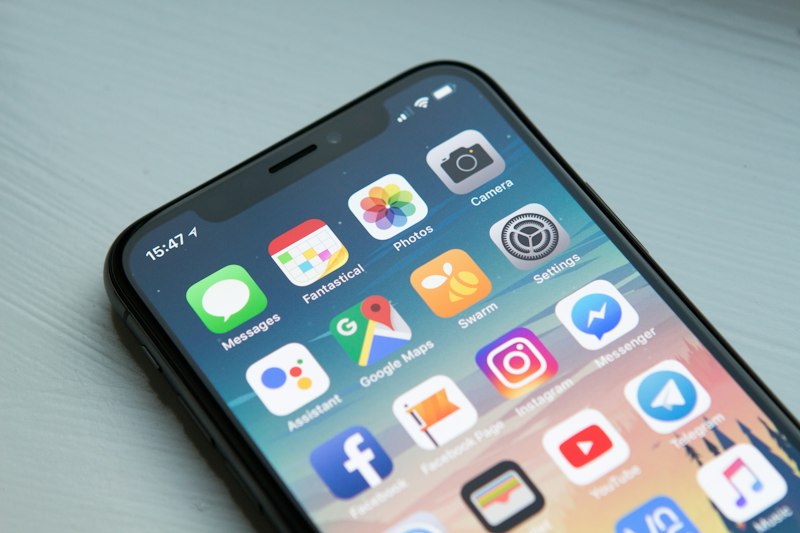
Mobile-first is not a trend, it is the standard - most ad clicks come from phones, so a landing page must look and work perfectly on a small screen.
If your existing site has weak conversion results even with good ads, it may be time to consider a complete website redesign instead of building more landing pages on a failing infrastructure.
Can a Landing Page Be Visible in Google? SEO and Destination Pages
It is a common question - and the answer is: yes, but with some caveats. A landing page can be optimised for SEO and attract organic traffic, but it needs a different approach from classic optimisation of a company website.
An SEO-optimised landing page should:
- Target specific, long-tail keywords (e.g. "bathroom renovation Wrocław price" instead of "renovation")
- Contain enough content - Google prefers pages with valuable, extensive content
- Have optimised meta tags, headings and structured data (Schema Markup)
- Load quickly - which is a natural advantage of landing pages written in plain HTML
- Be responsive and look good on mobile devices
However, remember that the main goal of a landing page is conversion from paid ads. SEO is a bonus - an additional source of traffic that comes without click costs. At our agency we design landing pages to combine both goals: to convert ad traffic AND be visible in organic search results. This is an approach we describe in detail in our SEO guide. If you operate locally, also check our article on local SEO in Wrocław.
Frequently Asked Questions About Landing Pages
What is a landing page?
A landing page (destination page) is a standalone web page created for one specific purpose - converting a visitor into a customer. It focuses on one service, one product or one action. It has no navigation menu, it does not distract the user - it leads them straight to conversion (filling in a form, calling, buying).
What is the difference between a landing page and a website?
A company website builds an image and presents the whole offer - it has a menu, subpages, a blog. A landing page serves a single goal: conversion. It has no menu, focuses on one offer and has one call to action. A landing page achieves 2-5x higher conversion than a home page, because it eliminates distractions.
How much does it cost to create a landing page?
The cost of a landing page depends on the complexity of the project, the number of sections and extra features (form, chatbot, integrations). At Dekada72H we build landing pages in plain HTML from scratch, which ensures maximum speed and conversion. Every project is quoted individually - contact us for a free quote.
How quickly can I have a landing page ready?
A typical landing page at our agency is built within a few working days - from the brief, through graphic design, to a finished, optimised page. If you have an urgent advertising campaign, we can speed up the process. Get in touch and we will agree a realistic schedule.
Does a landing page replace a company website?
No. A landing page and a company website are two different tools. A company website builds an image and presents the whole offer. A landing page serves conversion from specific advertising campaigns. The best results are achieved by companies that have both a professional company website and dedicated landing pages for specific campaigns.
Can I have several different landing pages?
Yes, and it is recommended! Every service, every campaign and every target group should have its own landing page. A renovation company can have separate landing pages for "bathroom renovation", "kitchen renovation" and "full flat renovation". Each will speak exactly to the customer looking for that specific service - and so will convert better than one general page.
Why Do We Build Landing Pages in Plain HTML?
As we wrote in our article on HTML vs WordPress, sites written from scratch have huge advantages. For a landing page those advantages matter even more, because every millisecond of loading and every pixel of design directly affects conversion.
A plain HTML landing page loads in under 1 second - that is 3-5x faster than a typical landing page built in WordPress with Elementor. With advertising budgets in the thousands of zloty a month, that difference in speed translates into real money.
Imagine: you spend 5,000 PLN a month on ads. A faster landing page increases conversion by 20%. That is additional enquiries from customers for the same money. An investment in a good landing page pays back in the first month.
In addition, a landing page written from scratch gives us full control over every element. We can test different variants of headlines, button colours, the layout of elements - and measure which variant brings better results. That is something you cannot achieve as easily with ready-made templates. See our portfolio for examples of our work.
How Do We Build Landing Pages at Dekada72H?
Our landing page building process is simple but effective:
- Goal analysis - We talk about your business, target group and campaign goal. Understanding "for whom" and "why" is the foundation of an effective landing page.
- Graphic design - We create a unique design tailored to your brand. Every element is designed with conversion in mind.
- Coding from scratch - We write clean HTML/CSS/JS - no templates, no WordPress, no unnecessary code. The result: lightning-fast loading.
- Launch and monitoring - We launch the site, configure analytics and conversion tracking. We monitor results and optimise.
Summary
A landing page is one of the most effective marketing tools your company can have. If you run advertising campaigns or want to win customers from the internet, a dedicated landing page can be the difference between a campaign that burns budget and one that brings real enquiries and sales.
The key is a strategic approach - a "pretty page" is not enough. You need a page designed with conversion in mind, written in clean code for maximum speed and optimised for a specific business goal. That is exactly what we do at Dekada72H.
A good landing page is not a cost - it is an investment. An investment that pays back with every new customer who fills in the form or picks up the phone.